Category: CELA

  • Questions about GE’s Private Stormwater System

    On this page

    Applying Ontario’s Environmental Protection Act to GE

    In 2024, the Ministry of the Environment, Conservation and Parks (MECP) used four (partially overlapping) instruments under Ontario’s Environmental Protection Act (1990) to regulate GEPR Energy Canada’s (GE’s) properties in Peterborough, ON:

    1. Director’s Order GE-PTBO-DO001FA, dated December 10, 2018; revoked March 2024 and replaced by:
    2. Director’s Order 1-228916698, dated March 6, 2024
    3. Director’s Instructions for Interim PCB Waste Management — Monaghan Road, dated June 21, 1995; revoked May 2024 and replaced by Director’s Order 1-228916698, Appendix A: Requirements for the In-Situ Management of PCB-impacted Soils at the Monaghan Road Parking Lot on Site 2
    4. ECA 8032-BEJNAK, dated September 30, 2019.

    Director’s Order 1-228916698 applies to two Sites on GE’s properties:

    • “Site 1” means the property with two municipal addresses of 107 Park Street and 1160 Monaghan Road, Peterborough, ON with the following Property Identifier Number 28081-0123.
    • “Site 2” means the property with two municipal addresses of 1063 and 1091 Monaghan Road, Peterborough, ON with the following Property Identifier Number 28067-0046.

    Director’s Order GE-PTBO-DO001FA, dated December 10, 2018, covered two additional GE properties, until March 6, 2024:

    • “Site 3” means the property located at 297 Rink Street, Peterborough, ON with the following Property Identifier Number 28091-0139.
    • “Site 4” means the property located at 107 Rubidge Street, Peterborough, ON with the following Property Identifier Number 28091-0137.

    Director’s Instructions for Interim PCB Waste Management – Monaghan Road covered Site 2, until May 8, 2024.

    The MECP agreed to GE’s request that Site 3 and Site 4 be excluded from Director’s Order 1-228916698.1“On March 16, 2023, GEPR requested that Site 3 and Site 4 be removed from this Director’s Order. Those two properties were included in the previous order as there are monitoring wells located on them that are part of the Site monitoring program. However, the monitoring wells are being replaced with new monitoring wells to be located on adjacent off-property locations by GEPR, which is acceptable to the Ministry, and therefore it is appropriate to remove them as reflected in this Order.” Ministry of the Environment, Conservation and Parks, Director’s Order 1-228916698, March 6, 2024, p. 6. The 2024 PCB Monitoring Report for Stormwater and Groundwater prepared by GE’s consultant, AECOM Canada ULC (AECOM), included findings for Site 3 and Site 4 per Director’s Order GE-PTBO-DO001FA, and findings for Site 2 per the 1995 Director’s Instructions.
    [top]

    Monitoring PCBs in GE’s Groundwater and Stormwater

    Director’s Order 1-228916698 identifies polychlorinated biphenyls (PCBs) as one of two primary contaminants of concern associated with Site 1 and Site 2 – the other being trichloroethylene (TCE) and its degradation compounds, such as dichloroethylene and vinyl chloride:

    The main concern regarding potential off-site environmental impacts associated with the PCB contamination at the Site is for PCB molecules to be transported off-site via water discharges into the municipal storm water sewer system which flows eastward along Rink Street and discharges into Little Lake and the Otonabee River.

    Little Lake and the Otonabee River also subject to recreational water activities, and exposure to PCB contaminated waters and sediment may represent a human health risk. PCBs also transfer up the ecological food chain to other aquatic, terrestrial and avian species within which the contaminants may bioaccumulate and result in ecological impacts. As such, further inputs of PCBs to Little Lake and the Otonabee River system should be mitigated.

    Various studies have shown that deposits of PCB contaminated sediments are present in Little Lake and further downstream along the Otonabee River and in Rice Lake, which the Otonabee flows into, located approximately 20 kilometres south of the City of Peterborough.

    Studies have shown that PCBs are present within the tissues of sport fish collected from the Otonabee River and Rice Lake at concentrations that have caused fish consumption advisories to be issued and which should be followed for the protection of human health; refer to the MECP’s online ‘Guide to Eating Ontario Fish’. The Hiawatha First Nation community is located on the north shore of Rice Lake and community members, as well as other sport fishers, consume fish from the lake. …

    In regard to the PCB storm water sewers (water and sediment) and groundwater monitoring programs, MECP Eastern Region Technical Support Section reviews annual monitoring reports and provides comments that are reviewed with GEPR to guide further monitoring activities and site management actions. The reviews to date have recommended continuation of the ongoing monitoring program.

    Considering the long-term and wide-spread nature of the PCB contamination at the Site, and the ongoing instances of PCB contaminant concentrations in storm water discharges from the Site, it is expected that the PCB monitoring program will continue to be required of GEPR for many years to monitor the effectiveness of its actions to control, prevent and mitigate PCB discharges from the Site to the natural environment.2Ministry of the Environment, Conservation and Parks, Director’s Order 1-228916698, March 6, 2024, pp. 8, 11.

    Details of GE’s program for monitoring PCBs in the groundwater and stormwater include:3See Director’s Order 1-228916698, Appendix B, Table 1: Groundwater Monitoring and Sampling Program, Table 3: Storm Sewer Monitoring Program, Figure 1A: Groundwater Monitoring and Sampling Location PCB at Facility,  Figure 1B: Groundwater Monitoring and Sampling Location PCB at Monaghan Road Parking Lot, and Figure 3: Storm Water Monitoring Locations.

    • Groundwater monitoring
      • Site 1: 3 monitoring wells
      • Site 2: 7 monitorong wells
      • Monitoring wells are sampled for Total PCB one time per year in the spring.
      • Monitoring includes measuring groundwater levels.
    • Stormwater monitoring
      • Site 1: 13 outfalls
      • Site 2: 4 outfalls
      • City of Peterborough: 5 manholes
      • Little Lake: sample taken 15 m from culvert inlet
      • Most storm sewer outfalls, including 3 City of Peterborough storm sewer manholes, are sampled three times per year during or immediately following a rain event (10 mm).
      • City of Peterborough manhole (MH135703), located near the intersection of George and Rink Streets, is sampled six times per year.
      • Where present, stormwater will be sampled for Total PCB (including Aroclors) and Total Suspended Solids (TSS).
      • Where present, sediment will be sampled for Total PCB and TSS and its thickness measured.

    [top]

    Questions about GE’s Private Stormwater System

    AECOM’s documentation of its monitoring of PCB raises a critical question about whether GE’s private stormwater system somehow connects to the City’s public stormwater system.

    On the one hand, AECOM’s 2024 PCB Monitoring Report for Stormwater and Groundwater  (Appendix K: Storm Sewer Data Summary) makes no mention of any connection between the two systems. AECOM usually remarks that the run-off of rainwater from different Zones of GE’s properties “feeds” or “flows toward” the City’s stormwater system:

    • Zone 1 “feeds the municipal storm sewer [STM.MH136551] on Wolfe Street, located north of the Site [1]”
    • Zone 2 “feeds the municipal storm sewer [STM.MH135683] on Park Street, located east of the Site [1]”
    • Zone 3 “feeds the municipal storm sewer on Albert Street. located south of the Site [1] … all of which flow towards City storm sewer MH135686”
    • Zone 4 “feeds the municipal storm sewers on Monaghan Road and Frank Street, located east and south of the Monaghan Road Property [Site 2]”
    • Zone 5 “feeds the municipal storm sewer on Monaghan Road [Site 2] … Some of the surface water from this area flows overland toward city CBs located on Monaghan Road. In 2016, MH166902 was established as the outfall monitoring location for Zone 5 … [and] collects stormwater drainage from Zone 5 and parts of Monaghan Road”
    • Zone 6 “feeds the municipal storm sewer on Rubidge and Townsend Street [Site 4] … All the water flows toward the STM.MH135686”
    • Zone 7 feeds the municipal storm sewer on Rubidge Street [Site 3] … All the water flows toward the STM.MH135686″

    On the other hand, AECOM’s Storm Sewer Monitoring Program seems to indicate that 15 of the 17 outfalls from Site 1 and Site 2 actually connect to the City’s stormwater system. AECOM puts asterisks beside two outfalls (CBR140 and CBR142) in Table 3 to indicate “Catch basin not connected to City storm sewer system. These locations will be monitored but will not be considered representative of storm water outfall from Site.”4Director’s Order 1-228916698, Appendix B, Table 3: Storm Sewer Monitoring Program.

    The question of whether GE’s private stormwater system connects to Peterborough’s public stormwater system seems critical to evaluating the efficacy of GE’s program for monitoring PCB in the stormwater. Accordingly, I have sought clarification from the Director, Peterborough District Office, MECP.

    According to AECOM’s 2024 PCB Monitoring Report for Stormwater and Groundwater, GE’s private stormwater system includes at least 162 catchbasins and manholes at Site 1 and Site 2 [p. ii]. AECOM’s maps of the Zones/Catchment Areas/Sub-catchment Areas associated with Site 1 and Site 2 in Appendix K refer to multiple features of GE’s stormwater system, including:

    • Storm Sewer Catchbasin
    • Decommissioned Storm Sewer Catchbasin
    • Storm Sewer Catchbasin – Below Water Table
    • Storm Sewer Manhole
    • Storm Sewer Manhole – Below Water Table
    • Storm Sewer – Below Water Table
    • Storm Sewer System (Underground)
    • Storm Sewer System (Overhead)
    • Inspected Sewer Pipe
    • Damaged Sewer Pipe
    • Jellyfish System

    The MECP has provided low-resolution, grayscale copies of these maps to the Canadian Environmental Law Association. Unfortunately, these images obscure many of features of GE’s stormwater system. I have asked the Director, Peterborough District Office, MECP for help in obtaining the higher-resolution, colour images copies of AECOM’s original submission of Appendix K.

    Findings

    Forthcoming.

    [top]

    Licence

    We are publishing this material under a Creative Commons Attribution-NonCommercial-ShareAlike 4.0 International licence.

    CC BY-NC: Attribution-NonCommercial 4.0

    [top]

    • 1
      “On March 16, 2023, GEPR requested that Site 3 and Site 4 be removed from this Director’s Order. Those two properties were included in the previous order as there are monitoring wells located on them that are part of the Site monitoring program. However, the monitoring wells are being replaced with new monitoring wells to be located on adjacent off-property locations by GEPR, which is acceptable to the Ministry, and therefore it is appropriate to remove them as reflected in this Order.” Ministry of the Environment, Conservation and Parks, Director’s Order 1-228916698, March 6, 2024, p. 6. ↩︎
    • 2
      Ministry of the Environment, Conservation and Parks, Director’s Order 1-228916698, March 6, 2024, pp. 8, 11. ↩︎
    • 3
      See Director’s Order 1-228916698, Appendix B, Table 1: Groundwater Monitoring and Sampling Program, Table 3: Storm Sewer Monitoring Program, Figure 1A: Groundwater Monitoring and Sampling Location PCB at Facility,  Figure 1B: Groundwater Monitoring and Sampling Location PCB at Monaghan Road Parking Lot, and Figure 3: Storm Water Monitoring Locations. ↩︎
    • 4
      Director’s Order 1-228916698, Appendix B, Table 3: Storm Sewer Monitoring Program. ↩︎

  • CELA Weighs In

    The Canadian Environmental Law Association (CELA) has joined others who have raised concerns about GEPR Energy Canada (GE)’s application to Ontario’s Ministry of the Environmental, Conservation and Parks (MECP) to renew an Environmental Compliance Approval (ECA) to emit noise and trichloroethylene (TCE) from a Groundwater Extraction and Treatment System running 24/7 107 Park St. North, Peterborough.

    CELA notes:

    “There is significant public concern about the GE Site due to persisting historical contamination, GE’s intention to demolish most of the buildings at the Site, and the adjacent Prince of Wales Public School. CELA is extremely concerned that important information relating to this application to renew the ECA, which will govern air and noise emissions at the site now and after the demolition, was not provided to the public through the Environmental Registry of Ontario (ERO) posting or through the requests of CELA.

    “CELA therefore requests that the MECP extend the time for public comment until 45 days after unredacted documents are provided to the public and posted on the ERO website, along with a draft of the proposed ECA.

    “In any event, CELA is of the view that it is not appropriate for GE to be seeking a renewal of its ECA for air and noise emissions at this time. Instead, GE should apply for a new ECA once the demolition has been completed. The conditions at the Site will be significantly different after the proposed demolition. The MECP should, therefore, assess the conditions at the Site after the demolition has been completed and then determine the appropriate terms and conditions to be included in the ECA.”

    The full text is available on CELA’s website.

  • GE’S Opening Salvo

    GEPR Energy Canada Inc. (formerly General Electric) has applied to renew an approval from Ontario’s Ministry of the Environment, Conservation and Parks (MECP) for emissions of noise and toxic chemicals from a Groundwater Extraction and Treatment System running 24/7 on the southern boundary of GE’s property at 107 Park St. North, Peterborough.

    Understandably, the community’s concern about a single renewal application from GE pales in comparison with concerns about the massive demolition that GE is planning for the same property. Yet, this renewal application is GE testing the waters – with the municipal and provincial governments and with the citizens of Peterborough. From that perspective, we need to push back on GE’s opening salvo.

    GE’s renewal application skirts all concern about the human health and environmental risks inherent in demolishing 26 contaminated, abandoned buildings, where asbestos, polychlorinated biphenyls (PCBs) and trichloroethylene (TCE) were used – and where thousands of workers contracted myriad grievous, even terminal illnesses from their exposure to these toxins.

    Instead, GE’s renewal application skips over the risks of demolishing its contaminated buildings and transports us silently to its “Future Operation”. Other posts here have already highlighted technical problems with GE’s estimates of noise and TCE emissions from a Groundwater Extraction and Treatment System in the “Future Operation” – and there’s more to come.

    Here, we want to highlight GE’s bad faith – especially its secretiveness and lack of transparency.

    First, GE supports its renewal application with four heavily redacted documents. The MECP has dismissed a request from the Canadian Environmental Law Association (CELA) to release unredacted versions of these documents, stating that GE refuses to the release of the redacted portions. Neither GE nor the MECP has explained the legal grounds for withholding this information from the public.

    The redacted information includes:

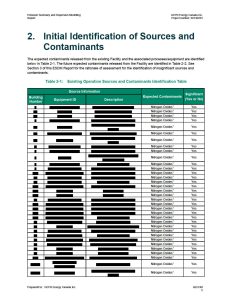
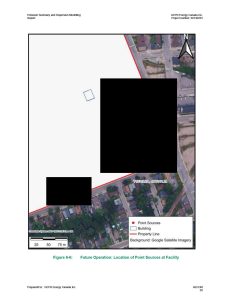
    • Sources of noise and TCE emissions and noise, including source names, equipment type, and location.
    • Number of pieces of equipment.
    • Sound power levels (dB)
    • Total facility emission rates, site-specific emission thresholds, and equipment flow rates.
    • References to the Groundwater Extraction and Treatment System, including its planned relocation.

    GE claims that the noise and trichloroethylene emission from its property will meet regulatory standards; however, the public cannot assess or verify those claims without access to unredacted versions of GE’s supporting documents.

    Second, under the guise of a simple renewal, GE is trying to secure a ten-year approval from the MECP to emit noise and trichloroethylene in a “Future Operation” that survives a massive demolition that GE has so far refused to disclose to public officials and citizens of Peterborough. In similar fashion, GE is trying to disentangle its compliance with provincial laws from BWXT’s operations on the same property – without regard for gaps in environmental safeguards that might result.

    Be sure to share your concerns about GE’s renewal application at https://ero.ontario.ca/notice/026-0523 before July 21, 2026.

    AECOM, Emission Summary and Dispersion Report (January 2026), p. 14.
    AECOM, Emission Summary and Dispersion Report (January 2026), p. 29.
  • Comment on GE’s proposal to renew ECA 7836-9HDRYN

    Background

    On May 20, 2026, the Ontario Ministry of the Environment, Conservation and Parks (MECP) posted on the Environmental Registry of Ontario (ERO) a proposal for the renewal of the Limited Operational Flexibility for an Environmental Compliance Approval (air & noise) No. 7836-9HDRYN for GEPR Energy Canada Inc. The posting indicated that “This proposal is for the renewal of the Limited Operational Flexibility for an Environmental Compliance Approval (air & noise) No. 7836-9HDRYN for GEPR Energy Canada Inc. an electric motor and generator manufacturing facility, located in the City of Peterborough, Ontario.” The comment period (45 days) on the ECA application was to close on July 4, 2026.

    The ERO posting indicates that some supporting materials may not be available online. If this is the case, one can request to view the materials in person in Toronto by contacting the MECP’s Client Services and Permissions Branch (CSPB).

    On June 1, 2026, I emailed the MECP to request copies of any supporting materials relating to GEPR’s proposal. On June 19, 2026, the MECP emailed four documents to me:

    1. GEPR Energy Canada Inc., Environmental Compliance Approval Application, February 5, 2026 (ECA Application Form – GE Vernova – Peterborough – Signed (redacted).pdf).
    2. AECOM, Acoustic Assessment Report (AAR), March 5, 2025 (RPT_2026-03-05-GE Peterborough AAR-60746233-signed (redacted).pdf).
    3. AECOM, Emission Summary and Dispersion Modeling (ESDM) Report, January 23, 2026 (RPT_2026_01_20_GE Peterborough_ESDM_60746233-Final (redacted).pdf).
    4. GEPR Energy Canada Inc., Request for Notice Under s. 7(1) of Local Air Quality Regulation for Use of a Specified Dispersion Model, April 6, 2026 (Request s.7(1) Specified Model.GEPET – Signed.pdf).

    The first three documents are heavily redacted.

    On June 23, 2026, I submitted several concerns and requests to the MECP with respect to GEPR’s proposal..

    Concerns and requests

    Concern 1. GEPR’s heavy redaction of key documents prevents the public from understanding fully and commenting meaningfully on GEPR’s application. GEPR’s application asserts no claim or basis for confidentiality. Neither GEPR nor the MECP has explained why so much information has been deemed confidential and unsuitable for public viewing.

    Requests:

    1. MECP should negotiate with GEPR for the release of unredacted versions of these documents, and
    2. MECP should extend the comment period to allow sufficient time for the review of any newly unredacted materials.

    Concern 2. GEPR is seeking approval to sever its operations from BWXT’s at the site under the renewed Environmental Compliance Approval (ECA). While GEPR claims that BWXT will apply for its own ECA, no such application appears on the Environmental Registry of Ontario.

    Requests:

    1. MECP should ensure that both GEPR’s and BWXT’s operations – now jointly covered by the ECA No. 7836-9HDRYN – continue to be covered without interruption under an equivalent set of ECAs.
    2. MECP should not approve GEPR’s request for severance until equivalent coverage of BWXT’s operations, under its own ECA, is in place.

    Concern 3. GEPR is wanting the renewal of its current Environmental Compliance Approval to cover “two operational scenarios”:

    (a) Existing Operation: All current and relevant operations with the inclusion of the new Groundwater Extraction and Treatment System (GETS) unit.

    (b) Future Operation: Most of the GEPR buildings are demolished, leaving only Buildings 2, 2A, 8A and 30. The demolition includes Building 14, within which the existing GETS unit is currently housed. A new GETS will be located on the south side of the property, equidistant to or further from the property line than the current unit’s location, with its exhaust stack extending vertically from the north side of the unit.

    GEPR claims that noise and trichloroethylene (TCE) emissions from the new, relocated GETS under the Future Operation scenario will be less than assessed emissions from the current GETS under the Existing Operation scenario.

    GEPR’s claim ignores notable differences between the Existing Operation and Future Operation, including:

    GEPR’s estimate of noise emissions from the news GETS ignores the effect of removing the unit from the sound-dampening confines of Building 14 and relocating the new unit to “the south side of the property.”

    Requests:

    1. MECP should recognize that the changes entailed by GEPR’s planned shift from Existing Operations to Future Operations (after demolishing most of its buildings on the property) far exceed the minor, low-risk changes that are permitted under the Limited Operational Flexibility terms of GEPR’s current ECA No. 7836-9HDRYN.
    2. MECP should ask GEPR to remove any reference to a Future Operation scenario from its application to renew ECA No. 7836-9HDRYNGEPR’s Future Operation scenario.
    3. MECP should advise GEPR that consideration of its Future Operation scenario would require a separate application for a new Environmental Compliance Approval.

    Concern 3b. In the alternative, the changes entailed by GEPR’s planned shift from Existing Operations to Future Operations (after demolishing most of its buildings on the property) raise serious concerns that are impossible to address, given GEPR’s heavy redaction of key documents.

    (a) Noise Emissions

    Again, GEPR is wanting the renewal of the current Environmental Compliance Approval to cover “two operational scenarios”:

    Existing Operation: All current and relevant operations with the inclusion of the new GETS unit will be assessed.

    Future Operation: Most of the GEPR buildings are demolished, leaving only Buildings 2, 2A, 8A and 30 and the Groundwater Extraction and Treatment System (GETS). The GETS unit is modelled in the same location as in the Existing Operation scenario.

    Again, GEPR claims that modeling under the Future Operation scenario represents a conservative assessment of noise emissions from the GETS since the unit will be equidistant to or further from the property line than the unit’s current location. In general, GEPR’s heavy redaction of key documents make its claims difficult to assess in general.

    There is, however, one notable difference that GEPR omits from its analysis of the Future Operations scenario: Building 14, within which the GETS unit is currently housed, will be torn down. A new GETS will be located on the south side of the property, with its exhaust stack extending vertically from the north side of the unit.

    GEPR’s modeling of noise emissions under the Future Operation scenario takes account of the distance from the GETS to the property line, but ignores the effect of removing the GETS from the sound-dampening confines of building 14 to “the south side of the property.”

    Request:

    1. MECP should question GEPR’s calculation of noise emissions under the Future Operation scenario (after GEPR has demolished most of its buildings on the property).

    (b) Air emissions

    AECOM’s ESDM addresses two scenarios:

    “Existing Operation: All current and relevant operations will be assessed; and

    “Future Operation: Most of the GEPR buildings are assumed to be demolished leaving only Buildings 2, 2A, 8A and 30 and the GETS unit in operation. The [GETS] unit is modelled in the same location as Scenario 1. This represents a conservative assessment since any relocation of the GETS will be equidistant to or farther from the property line than the current GETS location.

    “The scope of the Future Operation will include the following equipment in the remaining buildings:

    “* One groundwater treatment system [GETS] with an air stripper, exhausting [redacted] above ground through [redacted]. …

    “A maximum design flow rate of [redacted] for the air stripper in the ground water treatment system [GETS] is proposed for the production limit under the Limited Operational Flexibility. …

    “For the Existing Operation, the groundwater treatment system [GETS] is currently located [redacted] on [redacted]. Ground water contaminated with Volatile Organic Compounds (VOC) is sprayed into an aerator tank from above, where it is met with a counter-current of air. The VOCs present in the water are released into the air and are exhausted into the atmosphere. The groundwater treatment system has a design flow rate of [redacted] with a maximum air exhaust of [redacted].

    “For the Future Operation, the same groundwater treatment system [GETS] is proposed for relocation, following the removal of [redacted]” [1.1 Purpose and Scope of ESDM Report, p. 1; 1.3 Description of Products and Raw Materials, p. 2]

    GEPR is inconsistent in redacting its description of the GETS unit in AECOM’s ESDM and AAR Reports. The AAR Report includes unredacted details of the GETS unit under the Existing Operation and Future Operation scenarios:

    “In addition, GEPR plans to demolish most the buildings on the part of the property controlled and occupied by GEPR … Buildings 2, 2A, 8A and 30 shall remain and the Groundwater Extraction and Treatment System (GETS) currently located within Building 14 and will be replaced by a new GETS unit located on the south side of the property. An exhaust stack serving the new GETS will be extended vertically from the north side of the unit.” [Executive Summary; 1.1 Purpose and Scope of ESDM Report]

    With these additional details in hand, the adequacy of AECOM’s assessment of air emissions under the Future Operation scenario is still unverifiable.

    The mass of Volatile Organic Compounds released into the atmosphere is a function of water flow rate and influent concentration and would essentially be unaffected by the mere relocation of the GETS under the Future Operation scenario. Other changes entailed by GEPR’s planned shift from the Existing Operation scenario to the Future Operation scenario may impact the dispersion of VOCs into the environment:

        1. the GETS is to be moved to the south side of the property and a new exhaust stack is to be extended vertically from the north side of the relocated unit, and
        2. Building 14, which currently houses the GETS, along with most surrounding buildings, are to be demolished in the shift from the Existing Operation to the Future Operation.

    Changes in stack location, stack height, and surrounding-building geometry under the Future Operation scenario may impact the Point-of-Impingement (POI) concentration of VOCs at the nearest receptors — the adjacent homes and Prince of Wales Public School. I am unable to confirm that GEPR’s application takes sufficient account of these changes when modelling air emissions under the Future Operation scenario:

        1. the ESDM Report’s discussion of Emission Threshold Screening (pp. 8-9) and Explanation of the Methods Used for Emission Estimates and Data Quality – Air Stripper – Groundwater Treatment (p. 11) are both heavily redacted.
        2. GEPR’s Request for Notice Under s. 7(1) of Local Air Quality Regulation for Use of a Specified Dispersion Model lists both “Surrounding Building Information” and “Downwash Effect” as “Not available.” [6. Additional Facility Information, p. 6]

    Finally, I am also unable to determine whether AECOM considered any effect of the extensive demolition — for example, removal of the existing surface cap or changes to subsurface drainage — on the VOC concentration of the groundwater feeding the GETS, because the explanation of the emission-estimate methodology (p. 11) is redacted.

    Accordingly, I request:

        1. the MECP confirm that GEPR’s Future Operation scenario adequately models the as-built, post-demolition configuration — the new stack location and height, with surrounding buildings removed,
        2. the MECP confirm that predicted VOC concentrations at the nearest homes and at Prince of Wals Public School remain within the applicable O. Reg. 419/05 limits.

    Paul Allen

    1292 Ridge Rd., Picton, ON

    556 Howden St., Peterborough, ON

    [email protected]


    x